

(1).png "Become a Blockchain Developer: 2025 Roadmap")
How to Become a Blockchain Developer in 2025: Complete Roadmap + Tools
Introduction: The Blockchain Revolution Needs You
Imagine building the financial infrastructure of the future, creating decentralized applications that transform industries, or working on cutting-edge technology that could redefine how we interact with the digital world. This isn't science fiction—it's what blockchain developers do every day. And in 2025, the opportunities are more exciting than ever.
The blockchain developer job market has exploded. According to LinkedIn's 2025 Emerging Jobs Report, blockchain developer roles have grown by 300% since 2023, with median salaries ranging from $120,000 to $250,000 depending on specialization and experience. Despite this demand, there's still a significant shortage of qualified developers—meaning those with the right skills have incredible opportunities.
Whether you're a complete beginner or an experienced developer looking to transition into blockchain, this comprehensive guide will provide a clear roadmap, essential tools, and practical steps to launch your blockchain development career in 2025.
Why Become a Blockchain Developer in 2025?
Before we dive into the how, let's examine why blockchain development is such an attractive career path in 2025:
Explosive Market Growth
The blockchain technology market is projected to reach $163.8 billion by 2029, according to MarketsandMarkets. This growth is driven by:
- Enterprise adoption across finance, supply chain, and healthcare
- Government digital currency initiatives
- DeFi and Web3 application expansion
- NFT and metaverse infrastructure development
High Demand, Low Supply
There are currently 3.5 blockchain developer job openings for every qualified candidate, creating a candidate's market with:
- Competitive salaries and signing bonuses
- Remote work opportunities
- Equity and token-based compensation
- Continuous learning and growth potential
Future-Proof Career
Blockchain technology is still in its early stages, meaning early adopters have:
- First-mover advantage in a growing field
- Opportunity to work on groundbreaking projects
- Chance to shape industry standards and practices
- Portable skills across multiple blockchain platforms
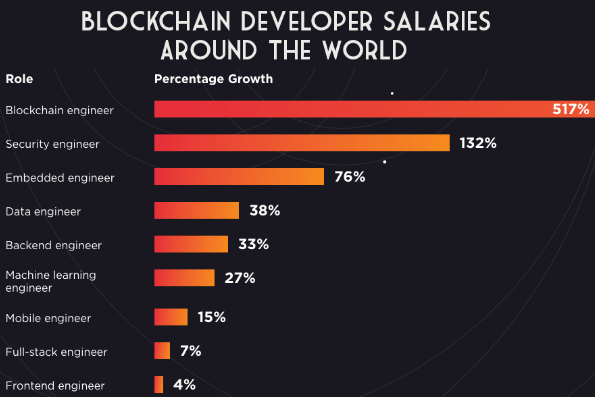
Suggested alt text: Charts showing blockchain developer job growth, salary ranges, and skill demand in 2025
Blockchain Developer Roadmap 2025: From Zero to Professional
Here's your step-by-step roadmap to becoming a blockchain developer. The journey typically takes 6-18 months depending on your starting point and time commitment.
Phase 1: Foundation Building (Months 1-3)
Prerequisites: You don't need a computer science degree, but you should understand:
- Basic programming concepts (variables, loops, functions)
- How the internet works (HTTP, APIs, client-server model)
- Basic mathematics (cryptography concepts)
Essential Skills to Learn:
- JavaScript/TypeScript: The language of Web3 and most blockchain interfaces
- Python: Widely used for blockchain tools, smart contracts, and scripting
- Solidity: The primary language for Ethereum smart contracts
- Basic cryptography: Public/private keys, hashing, digital signatures
Learning Resources:
- FreeCodeCamp's Blockchain Developer Certification
- CryptoZombies (interactive Solidity tutorial)
- Ethereum.org developer documentation
Phase 2: Core Blockchain Concepts (Months 4-6)
Key Concepts to Master:
- How blockchain technology works fundamentally
- Consensus mechanisms (Proof of Work, Proof of Stake, etc.)
- Smart contracts and their execution environments
- Decentralized application (dApp) architecture
- Token standards (ERC-20, ERC-721, etc.)
Hands-On Projects:
- Build your first smart contract
- Create a simple token
- Develop a basic dApp frontend
- Set up and interact with a test blockchain
Phase 3: Specialization (Months 7-12)
Choose one or more specializations based on your interests:
Smart Contract Development
Focus on writing secure, efficient smart contracts for:
- DeFi protocols
- NFT marketplaces
- DAO governance systems
Blockchain Infrastructure
Work on the underlying blockchain technology:
- Node operation and maintenance
- Layer 2 scaling solutions
- Blockchain interoperability
dApp Frontend Development
Specialize in user interfaces for decentralized applications:
- Web3 integration
- Wallet connectivity
- User experience optimization

Suggested alt text: Flowchart showing blockchain developer learning path from foundation to specialization
Essential Tools for Blockchain Developers in 2025
The right tools can significantly accelerate your development process. Here's what professionals are using in 2025:
Development Environments
- Remix IDE: Web-based Solidity development environment
- Hardhat: Ethereum development environment for professionals
- Truffle Suite: Comprehensive blockchain development framework
- VS Code with Solidity extensions: Popular code editor with blockchain plugins
Testing Frameworks
- Hardhat Network: Local Ethereum network for testing
- Ganache: Personal blockchain for Ethereum development
- Waffle: Framework for testing smart contracts
Deployment Tools
- Infura: Blockchain infrastructure API for deployment
- Alchemy: Blockchain developer platform
- Moralis: Web3 development platform
Security Tools
- Slither: Solidity static analysis framework
- Mythril: Security analysis tool for EVM bytecode
- OpenZeppelin Defender: Secured smart contract operations
Key Programming Languages for Blockchain Development
While Solidity remains crucial, the 2025 blockchain developer needs a diverse language toolkit:
Solidity
The dominant language for Ethereum smart contracts:
- Object-oriented, high-level language
- Syntax similar to JavaScript
- Used for 80% of smart contracts
Rust
Growing in importance for next-generation blockchains:
- Used by Solana, Polkadot, and NEAR
- Memory safety and performance advantages
- Steeper learning curve but high demand
Go
Popular for blockchain infrastructure and tools:
- Used by Ethereum clients like Geth
- Excellent for building scalable systems
- Strong standard library and tooling
JavaScript/TypeScript
Essential for dApp frontends and tooling:
- Web3.js and Ethers.js libraries
- React and Vue for frontend development
- Node.js for backend and tool development
Building Your Blockchain Developer Portfolio
In 2025, a strong portfolio is more valuable than degrees. Here's how to build one:
Essential Portfolio Projects
- Deployed smart contracts: Showcase contracts on testnets or mainnets
- dApps with frontend interfaces: Demonstrate full-stack capability
- Open-source contributions: Contribute to blockchain projects on GitHub
- Technical writing: Blog posts or documentation about blockchain concepts
Where to Showcase Your Work
- GitHub: Well-documented code repositories
- Personal website: Portfolio site with project demos
- Dev communities: Stack Overflow, Ethereum Magicians, Discord communities
- Social media: Twitter/LinkedIn for sharing insights and projects
Getting Real-World Experience
- Hackathons: Participate in online or in-person blockchain hackathons
- Bounty programs: Complete bounties for blockchain projects
- Internships: Apply for blockchain developer internships
- Freelance work: Take small contracts on Web3 freelance platforms

Suggested alt text: Screenshots of blockchain developer portfolios showing projects and GitHub contributions
2025 Job Market: Where the Opportunities Are
The blockchain job market has diversified significantly. Here are the hottest areas:
DeFi Development
Decentralized finance continues to be the largest employer of blockchain developers:
- DEX (decentralized exchange) development
- Lending protocol creation
- Yield farming strategies
- Cross-chain interoperability
NFT and Gaming
Beyond collectibles, NFTs are enabling new gaming and content economies:
- GameFi and play-to-earn mechanics
- NFT marketplace development
- Digital identity and authentication systems
Enterprise Blockchain
Traditional companies are adopting blockchain for:
- Supply chain tracking
- Identity management systems
- Document verification and notarization
Infrastructure and Core Development
Building the underlying blockchain technology:
- Layer 2 scaling solutions
- Node infrastructure and services
- Developer tools and APIs
Staying Current: Continuous Learning in Blockchain
Blockchain technology evolves rapidly. Here's how to stay current:
Essential Resources
- Official documentation: Ethereum.org, Solana docs, etc.
- Developer communities: Discord, Telegram, and forum communities
- Newsletters: Week in Ethereum, Bankless, The Block
- Conferences: Devcon, EthGlobal, and virtual events
Emerging Technologies to Watch
- Zero-knowledge proofs and privacy technology
- Quantum-resistant cryptography
- AI-blockchain integration
- Decentralized identity solutions
Conclusion: Your Journey Starts Now
Becoming a blockchain developer in 2025 is both challenging and incredibly rewarding. The field offers the rare combination of cutting-edge technology, competitive compensation, and the opportunity to work on projects that could fundamentally change how our digital world operates.
Remember that everyone starts somewhere—many of today's leading blockchain developers were complete beginners just a few years ago. The key is to start building, keep learning, and engage with the community.
Your path might look different from others, but with consistent effort and the right roadmap, you can build a successful career in this exciting field. The blockchain revolution is being built right now—and developers are its architects.
Ready to start your blockchain journey? Share your goals or questions in the comments below, and subscribe for more developer resources!

